

When the relationship between two ideas gets lost, try one boundary before slowing the entire message. A pause can mark that boundary. Its purpose matters more than hitting a particular duration.
Skills
A pause is not the same as speaking slower
Test one boundary between ideas instead of slowing every word or chasing a target speaking rate.
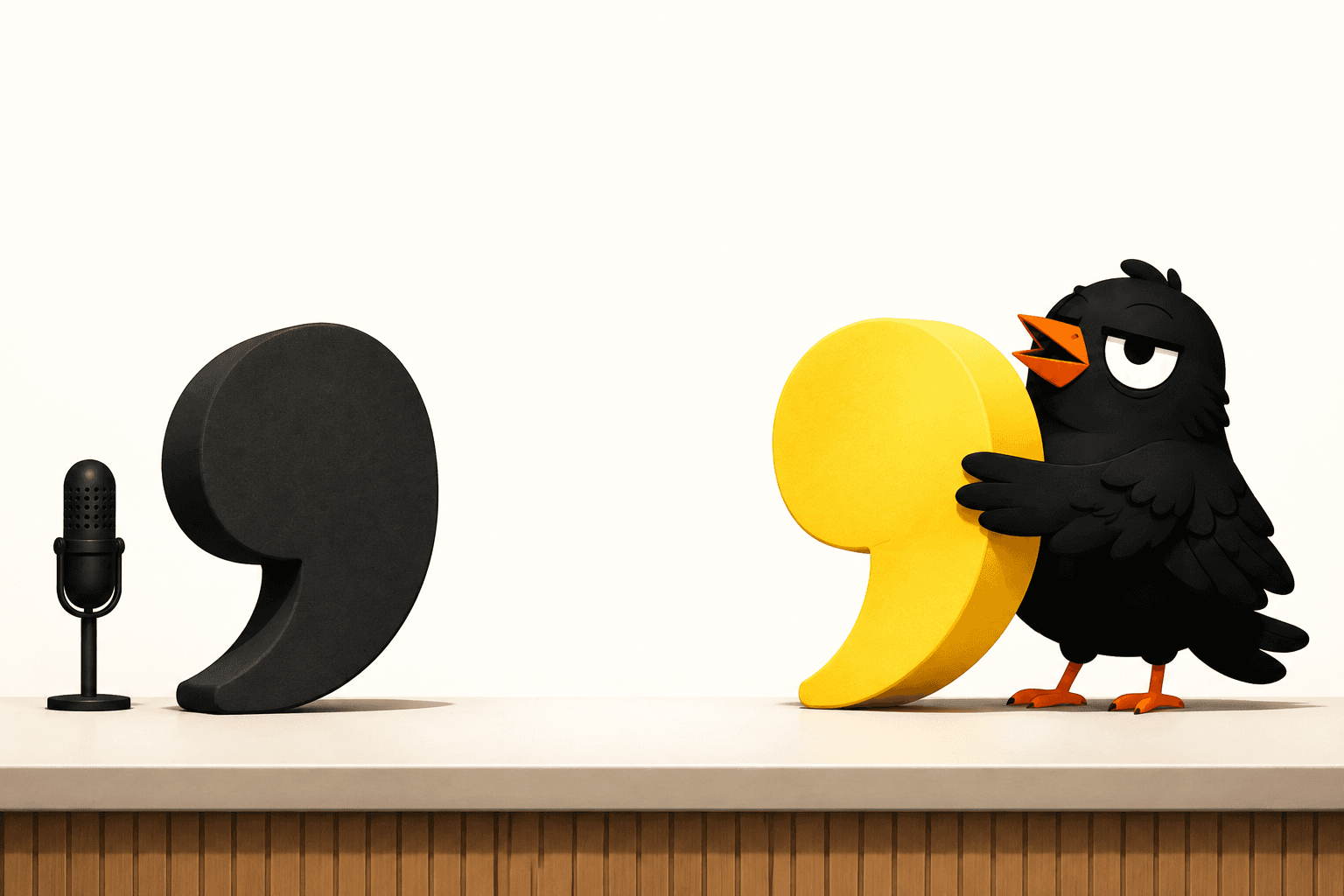
What needs to become clear?
An invented work example:
We keep the old report for reconciliation. New decisions use the updated report.
The listener needs to distinguish two purposes. If the sentences run together, separating them is worth testing. If “reconciliation” is unfamiliar, silence will not explain it. Change the wording first.
“Speak slower” does not tell you where meaning went missing. A confusing sentence can also become a carefully extended confusing sentence.
A boundary is more than silence
In an experimental study of intonational boundaries, listeners used several acoustic cues: pauses, final lengthening and pitch changes. How listeners weight acoustic cues to intonational phrase boundaries.
This supports distinguishing a perceived boundary from a silent interval alone. It does not prescribe an ideal pause for a meeting or validate the exercise below. A different language, listener or context may change the result.
Two takes, one change
- Record the example in your ordinary speaking voice.
- Listen without the script. Can you hear the two different purposes of the reports?
- Record a second take, deliberately marking the transition before “New decisions”. Do not deliberately stretch the rest. Do not hold your breath to manufacture silence.
- If practical, shuffle the listening order. Choose the version that makes the distinction clearer without sounding performed.
- Try a new example: “Use this channel for urgent questions. Keep the documents in the task.”
These sentences are authored practice material, not participant recordings or reported Ptichi results.
| Outcome | Next move |
|---|---|
| Clearer and comfortable | Try new words without copying a duration |
| A theatrical stop | Make the transition less conspicuous |
| Little audible difference | Check wording and idea order |
| Clear only while reading | Listen without the text or ask another person |
Take B is allowed to lose. It is an attempt number, not a quality label.
The strongest limitation
A clear boundary does not guarantee a clear explanation. Unfamiliar terms, missing reasons and assumed context may matter more than timing. One successful repeat does not establish a durable skill; awkward transfer is a reason to keep testing.
Continue with one thought contrast or a complete change announcement. In Ptichi, timing remains experimental. A number cannot stand in for a listener.
Reviewed:
Related

Goals
Explain a change without narrating the whole meeting
Rehearse what changes, why it changes and what happens next, with an honest boundary between a decision and a proposal.
Practice
Two thoughts. One useful pause.
A short listening exercise: record a contrast, make the boundary audible, then try it with new words.
Product
What Ptichi is
A private desktop practice instrument for making professional speech easier to follow — without pretending one score can judge your voice.