Voice Foundations
Thought groups, useful pauses, statement endings, question intonation, focus, pace and clean starts and finishes.


Ptichi
Start with a situation or a speaking habit. Explore the prepared texts and the programmes taking shape.
Programme previews · Desktop delivery in development
Open practice transcripts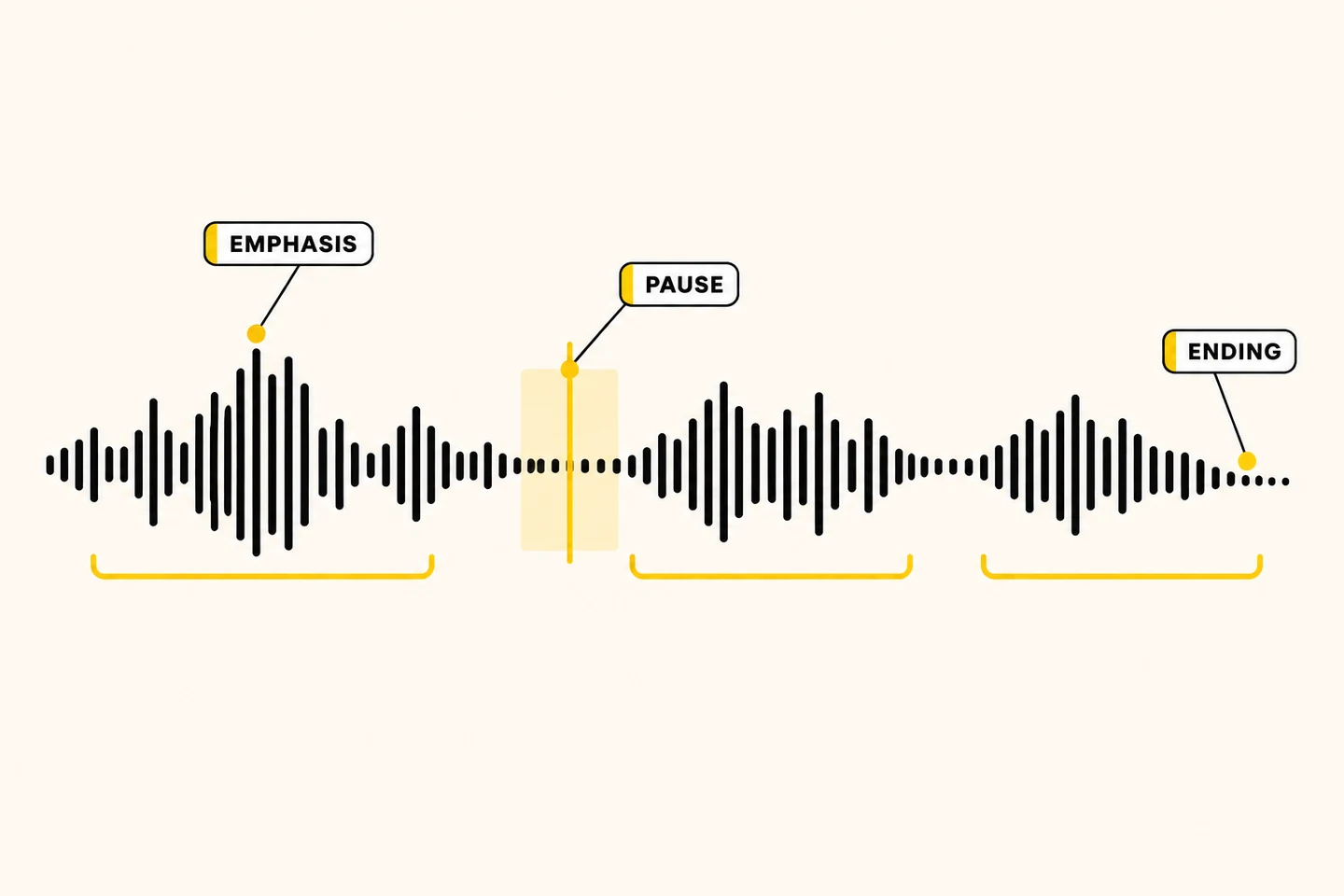
Thought groups, useful pauses, statement endings, question intonation, focus, pace and clean starts and finishes.
Evidence-rich answers, silent planning, concise delivery and follow-ups without sounding memorised.
Recommendations, assumptions, trade-offs, numbers and difficult challenge questions under time pressure.
Turn real work into clear stories with a point, a turn, your contribution and an outcome — without fake drama.
Clarify the question, handle pushback, repair misunderstandings and answer the thing you did not rehearse.
Technical explanations, process walkthroughs, useful analogies and listener checks without drowning people in detail.
Think while speaking, replace filler spirals with useful planning pauses and structure an answer without a script.
Explain metrics, change, uncertainty and recommendations without reading the spreadsheet aloud or inventing certainty.
These are project-authored Ptichi practice transcripts: short Voice Foundations drills plus longer Reading Lab pieces. Use your own recorder if you want playback. The website itself does not record audio.
48 English practice transcripts are published here now: 12 Voice Foundations micro-drills and 36 longer reads across six distinct collections.
The text is practice material, not an acoustic target. A good attempt is one where the intended listener contrast survives naturally.
Ptichi Speech Score
Speech Score is a small notation system for rehearsing meaning. It marks thought groups, focus, completion and intention so you can change one thing without turning speech into choreography.
The marks are scaffolding. A good final take should work after most of them disappear.
Break the text by meaning, not by commas or a fixed number of words.
Give one word or short phrase the main weight of the thought.
Let a finished thought sound finished. Do not force the voice downward.
Name the job of the line: calm, firm, warm, curious or another useful intention.
Add one local note where it changes the next attempt. Do not annotate every breath.
/A light boundary inside one thought.
//A stronger reset before the next idea.
[WORD]The word or phrase carrying the contrast or main point.
↘The proposition is complete; let it settle naturally.
→The thought is still open and continues.
↗Useful for a genuine information question or an intentionally open contour.
{calm}A delivery intention. It changes the job, not your personality.
⟨note⟩A short local instruction for the next attempt.
Clean read → Marked rehearsal → Clean again → Retell from memory → Transfer to new words
Practice transcripts · English
Collections contain 5–7 texts with one speaking job. Start clean, use the score once, then remove support.
Collection
Six micro-drills for thought boundaries, completion, questions and focus.
6 short drills · about 10–20 seconds each
Hear three meaningful units: current state, remaining problem and next action.
Read naturally. Do not fix everything yet. Notice only where the meaning feels hard to carry.
The migration is complete but two records still need manual review and I will send the final confirmation this afternoon.Hear that the decision is complete rather than waiting for another clause.
Read naturally. Do not fix everything yet. Notice only where the meaning feels hard to carry.
We will use the second option.Hear the first part as context and the final part as the decision.
Read naturally. Do not fix everything yet. Notice only where the meaning feels hard to carry.
The first option is cheaper. It requires a manual step. I recommend the second option.Distinguish a genuine yes/no information question from a confirmation or checking question.
Read naturally. Do not fix everything yet. Notice only where the meaning feels hard to carry.
Are we ready to release? So the client already approved the change?Hear whether the speaker is asking for new information or checking something just heard.
Read naturally. Do not fix everything yet. Notice only where the meaning feels hard to carry.
What changed after the test? You changed which field?Hear exactly what is being contrasted or corrected.
Read naturally. Do not fix everything yet. Notice only where the meaning feels hard to carry.
We will send the update to the client today.Collection
Six micro-drills for hierarchy, local pace, planning, lists and turn-taking.
6 short drills · about 15–30 seconds each
Distinguish the main point from evidence and optional detail.
Read naturally. Do not fix everything yet. Notice only where the meaning feels hard to carry.
We improved the process. The average time went from five days to three days. We changed the approval flow and removed one manual handoff.Make numbers, constraints and consequences recoverable without slowing the entire answer.
Read naturally. Do not fix everything yet. Notice only where the meaning feels hard to carry.
We processed 2,480 records, 17 failed validation, and 6 still need manual review before the Friday cutover.Planning should sound like thinking rather than a chain of fillers and restarts.
Read naturally. Do not fix everything yet. Notice only where the meaning feels hard to carry.
The biggest risk is data quality. More specifically, we have not validated the historical mappings yet.Hear which list items are intermediate and which item completes the sequence.
Read naturally. Do not fix everything yet. Notice only where the meaning feels hard to carry.
We have three priorities: data validation, interface testing, and user acceptance.Hear a clean entry, a complete contribution and a clear handoff.
Read naturally. Do not fix everything yet. Notice only where the meaning feels hard to carry.
I see one risk here. The current plan assumes the source data is complete. What evidence do we have for the volume estimate?Use the controls on unseen material without notation or a memorised melody.
Read naturally. Do not fix everything yet. Notice only where the meaning feels hard to carry.
A migration finished this morning. Most records are correct. A small subset has a mapping problem. The business team can continue testing, but release should wait until the mappings are checked.Collection
Six 45–75 second reads for status, explanation, disagreement, recommendations, uncertainty and storytelling.
6 longer reads · roughly 45–75 seconds each
Hear what is complete, what is still open and which decision depends on the remaining check.
Read naturally. Do not fix everything yet. Notice only where the meaning feels hard to carry.
The migration itself is complete, but validation is not finished yet. Most records passed the first check. A small group still has mapping differences, and we are reviewing those now. The business team can continue testing the normal flow, but I would not call the release ready yet. I also do not want to promise a time that depends on a check we have not completed. The useful update is simpler: the main load succeeded, a small set still needs review, and the release decision comes after that review.Understand the business consequence before hearing the implementation detail.
Read naturally. Do not fix everything yet. Notice only where the meaning feels hard to carry.
The technical issue is in the transfer between two systems, but that is not the part the business needs first. The practical problem is that some customer changes are arriving without one required relationship. That means a user can create most of the record correctly and still be blocked later in the process. We are checking where that relationship disappears: in the source data, in the mapping, or during activation. Until we know that, I would avoid a broad fix. First we need to identify the exact step where correct data becomes incomplete.Hear the concern, the reason and the alternative without hearing a personal attack.
Read naturally. Do not fix everything yet. Notice only where the meaning feels hard to carry.
I understand why this approach is attractive. It solves the visible problem quickly, and that matters. My concern is what happens after the first release. We would add another rule that future teams have to understand, test and maintain. Before we commit to that, I would like to check whether the same problem can be solved closer to the source. If that works, the downstream process stays simpler. If it does not, the current proposal is still available. I am not arguing for delay. I am arguing for one short check before we make the more expensive design permanent.Recover the recommendation and why the trade-off is acceptable.
Read naturally. Do not fix everything yet. Notice only where the meaning feels hard to carry.
We have three realistic options. The first is the fastest to implement, but it leaves more manual work after launch. The second is technically cleaner, but it touches several systems and increases delivery risk. The third does less, but it solves the business problem with the smallest change. I recommend the third option. It is not the most ambitious design. It is the one that keeps the decision reversible while we learn from real use. If the missing capability becomes important later, we can extend it with better evidence instead of paying for complexity now.Hear uncertainty as bounded and actionable rather than evasive.
Read naturally. Do not fix everything yet. Notice only where the meaning feels hard to carry.
I do not know the root cause yet. I have an assumption, but I do not want to present it as a fact. What we know is that the value is correct in the source system and different after processing. That gives us a much smaller area to investigate. I want to check the transformation logic and the processing logs before I recommend a fix. If those two checks confirm the assumption, we can act quickly. If they do not, we will have ruled out the most likely path without changing production based on a guess.Follow the change from apparent technical defect to process insight and hear why the lesson matters.
Read naturally. Do not fix everything yet. Notice only where the meaning feels hard to carry.
A few years ago, I worked on an issue that looked like a system defect. Users said the application was losing data, so the first instinct was to search logs and reproduce the failure. We did that, but the evidence did not fit the story. Then we compared several cases and found the pattern: different teams were maintaining the same type of information in different places. The system was not randomly deleting data. Ownership was unclear. Once we changed the process and made the source of truth explicit, the issue became much easier to control. Since then, I try to investigate both the software and the process around it.Collection
Six reads for boundaries, bad news, feedback, mistakes, deadline trade-offs and de-escalation.
6 longer reads · roughly 35–55 seconds each
Hear what you can do, what you cannot take on and what the other person can decide next.
Read naturally. Do not fix everything yet. Notice only where the meaning feels hard to carry.
I can review the proposal today and give you comments before the end of the day. I cannot take ownership of the full rewrite as well, because that would push the other committed work out of the week. If the rewrite is the higher priority, we can change the plan and move something else. If it is not, I will stay with the review and leave the rewrite with the current owner. I want to be clear about the limit now rather than agree quickly and create a problem later.Understand the changed outcome first, then the reason and the next move.
Read naturally. Do not fix everything yet. Notice only where the meaning feels hard to carry.
I need to change the plan we discussed yesterday. The release will not happen on Thursday. During the final check we found a defect that can create duplicate records, and I do not think it is responsible to ship with that risk. The team is already isolating the cause. By tomorrow afternoon we should know whether the fix is small enough for this week or whether we need a new date. I know the delay affects other work, so I wanted to tell you as soon as the decision changed rather than wait until every technical detail was known.Hear one observable problem, its effect and a specific request without a character judgment.
Read naturally. Do not fix everything yet. Notice only where the meaning feels hard to carry.
Can I raise one thing about our review meetings? In the last two sessions, several decisions changed after the meeting because the final owner was not clear in the room. That means people leave with different assumptions and we spend time reopening the same point. Could we finish each decision with one sentence that names the owner and the next action? I am not asking for more process around the whole meeting. I only want a clean ending for decisions that create work for someone afterward.Hear what went wrong, what you own and what you are doing to repair it.
Read naturally. Do not fix everything yet. Notice only where the meaning feels hard to carry.
I sent you the wrong version of the file this morning. That was my mistake. I checked the content but not the attachment name, and the older draft was still in the folder. I have now sent the correct version and marked the outdated file so it cannot be confused again. I also want to check whether anyone used the first version before I assume the correction is enough. I am sorry for the extra work. The important part now is to make sure the wrong version does not keep moving through the process.Hear what is possible, what would have to change and which trade-off needs a decision.
Read naturally. Do not fix everything yet. Notice only where the meaning feels hard to carry.
Friday is still possible, but only if we reduce the scope. The current plan includes the data fix, the reporting change and a full regression test. We can finish all three properly by Tuesday. If Friday is fixed, my recommendation is to deliver the data fix and the critical test now, then move the reporting change to the next release. I do not want to call the full scope possible by Friday and quietly remove testing time to make the date look safe. The decision is really about scope, not effort.Hear that the disagreement contains two different decisions that can be handled separately.
Read naturally. Do not fix everything yet. Notice only where the meaning feels hard to carry.
I think we are arguing about two different questions. One is whether the current result is acceptable for the next release. The other is whether the underlying design should change permanently. We may disagree on the second question and still make a clear decision on the first. For today, can we decide whether the current result blocks release? Then we can schedule the design discussion with the right people and enough time. I would rather separate the decisions than keep repeating the same arguments at two different levels.Collection
Six reads for openings, contrast, turning points, quiet emphasis, concrete detail and clean endings.
6 narrative reads · roughly 35–60 seconds each
Enter the story quickly and understand why the moment matters before hearing background.
Read naturally. Do not fix everything yet. Notice only where the meaning feels hard to carry.
The train doors closed just as I reached the platform. I had left home early, checked the route twice and still watched the train leave without me. For a few seconds I was angry at the whole morning. Then I looked at the board and saw the next train was seven minutes away. Nothing important had actually happened. I had turned a small delay into a crisis before I even knew the consequence. I still remember that moment because it was such a clear example of how fast the body can react to a story the facts have not confirmed.Hear the old pattern, the change and the practical difference without a long chronology.
Read naturally. Do not fix everything yet. Notice only where the meaning feels hard to carry.
I used to answer difficult questions as soon as the other person stopped speaking. I thought a fast answer sounded prepared. In practice, I often started before I knew what I wanted to say, then filled the sentence with corrections. The change was small: I began allowing one quiet second before the first sentence. I did not become slower overall. I simply stopped spending the first ten seconds repairing an answer that had started too early. The pause felt much longer to me than it sounded to anyone else.Notice the moment when the expected explanation stops fitting and a new explanation appears.
Read naturally. Do not fix everything yet. Notice only where the meaning feels hard to carry.
For two days we treated the problem like a software defect. The error appeared after the same step, so that explanation felt obvious. Then one person asked a simple question: did every failed case come from the same source? We checked, and the pattern changed immediately. The software step was only where the problem became visible. The bad data had entered much earlier. That question saved us from fixing the place where we could see the symptom instead of the place where the problem began.Feel the shift in a story without extra volume or exaggerated emotion.
Read naturally. Do not fix everything yet. Notice only where the meaning feels hard to carry.
During dinner the electricity went out. At first everyone reached for a phone and started talking at once. Then we noticed the whole building was dark, not just our apartment. Someone found two candles, and for the next half hour there was nothing to fix. No television, no music, no messages coming in. The room became strangely quiet. What I remember most is not the blackout itself. It is how quickly the evening felt different when nobody could fill every empty second with another signal.See one concrete image that supports the point without losing the story in description.
Read naturally. Do not fix everything yet. Notice only where the meaning feels hard to carry.
There is a small bakery near my old bus stop. I do not remember the color of the walls or the name of every pastry, but I remember the paper number tickets. They were bright red and always slightly curled at the corners. On winter mornings people stood in heavy coats holding those tiny red numbers, waiting for coffee before the bus came. That one detail brings the whole place back to me. It is a useful reminder that a story often becomes more vivid when you choose one specific thing and trust it.Hear a complete ending that leaves the listener with the point without a second summary.
Read naturally. Do not fix everything yet. Notice only where the meaning feels hard to carry.
The first bicycle I repaired myself still had one problem when I finished: the bell did not work. I had spent an afternoon adjusting the brakes, cleaning the chain and putting the wheel back on three times. By the end I was tired of touching it. I rode around the block anyway. The brakes worked, the chain stayed on, and the bicycle felt like mine in a new way. I ordered a new bell the next day. What mattered was not that I had repaired everything perfectly. It was that I finally trusted myself enough to ride the thing I had worked on.Collection
Six reads for dates, close numbers, identifiers, branching instructions, comparisons and corrections.
6 precision reads · roughly 25–45 seconds each
Recover the date, time change and action without replaying the whole message.
Read naturally. Do not fix everything yet. Notice only where the meaning feels hard to carry.
The workshop is still on Wednesday, October fourteenth, but the start time has moved from nine thirty to ten fifteen. The room is unchanged: Conference Room B on the third floor. Please arrive by ten if you need a laptop adapter, because we will stop setup at ten ten. The session itself should finish at twelve forty-five. If you are joining remotely, use the same link as before. The only changes are the start time and the earlier setup cutoff.Distinguish baseline, current result, target and exception count.
Read naturally. Do not fix everything yet. Notice only where the meaning feels hard to carry.
Last month we processed eighteen thousand seven hundred fifty requests. Four point six percent needed manual review. This month the volume is slightly lower at seventeen thousand nine hundred, but the manual-review rate has risen to six point two percent. Our target is below five percent. The total volume is not the concern. The change we need to understand is the review rate, especially the two hundred sixteen cases that came from the new workflow.Recover a person's name, an identifier and a location correctly after one listen.
Read naturally. Do not fix everything yet. Notice only where the meaning feels hard to carry.
Please send the package to Mira Novak, spelled N-O-V-A-K. The reference is QF-17B, not QF-71B. Delivery is through North Gate 4, where the security desk has the visitor list. If the courier cannot find the gate, ask them to call the main reception rather than leave the package at Gate 1. The three details that matter are Mira Novak, QF-17B and North Gate 4.Follow the order of actions and remember the one condition that changes the sequence.
Read naturally. Do not fix everything yet. Notice only where the meaning feels hard to carry.
Start by connecting the power cable, but do not switch the unit on yet. Next, attach the sensor and check that the small green light appears. If the light stays off, stop there and reconnect the sensor before doing anything else. Once the light is steady, switch on the unit and wait for the startup screen. Only then connect the network cable. The sequence matters because the sensor check is easier to diagnose before the rest of the system is active.Remember which option is cheaper, which is faster and which difference actually drives the choice.
Read naturally. Do not fix everything yet. Notice only where the meaning feels hard to carry.
Option A costs one hundred twenty-eight per month and includes standard support. Option B costs one hundred forty-two and adds weekend support plus a four-hour response target. The price difference is fourteen per month. For us, the deciding point is not the fourteen. It is the weekend coverage, because most of our planned changes happen on Saturday mornings. If we did not need that window, I would choose Option A. With the current schedule, Option B fits the actual risk better.Hear the correction immediately and remember the corrected value rather than the first value.
Read naturally. Do not fix everything yet. Notice only where the meaning feels hard to carry.
I need to correct one number from my previous message. The shipment is fifty boxes, not fifteen. The first document had the digits reversed in the summary line, although the detailed order was correct. The delivery date is still the same, and the price does not change. Only the quantity in the summary needs correction. I have replaced the document and highlighted fifty boxes in the new version so the wrong number does not continue into planning.Collection
Six reads for introductions, examples, knowledge gaps, follow-ups, motivation and clean endings.
6 interview reads · roughly 35–60 seconds each
Hear what you do now, the thread connecting your experience and what kind of work you want next.
Read naturally. Do not fix everything yet. Notice only where the meaning feels hard to carry.
I work on business systems where data and process have to agree. Over the years, I have moved from fixing individual issues to designing changes that several teams can use safely. The part I enjoy most is taking a messy problem, finding the real decision inside it and making the next step clear for both technical and business people. I am now looking for a role where that mix matters: enough depth to solve difficult problems, but also enough ownership to improve how the team works around them.Follow the problem, your decision, what you did and what changed without hearing a rigid interview template.
Read naturally. Do not fix everything yet. Notice only where the meaning feels hard to carry.
One project had a recurring data error that several teams had already treated as a technical defect. I started by comparing the failed cases instead of changing the code. The pattern showed that the same field was being maintained in two different places, so the system was receiving conflicting instructions. I brought the owners together, we agreed on one source of truth and then changed the validation around it. The useful lesson for me was not the specific fix. It was that the fastest technical answer would have solved the symptom and preserved the cause.Hear the knowledge boundary clearly, followed by a credible way to reason or find the answer.
Read naturally. Do not fix everything yet. Notice only where the meaning feels hard to carry.
I have not worked with that exact product, so I do not want to pretend I know its implementation details. The closest experience I have is with a similar integration pattern, where the main risks were ownership of the source data, retries and error visibility. I would start by checking whether those same constraints exist here, then read the product-specific documentation before proposing a design. If you want, I can also talk through how I would evaluate the unfamiliar part rather than guess at the final answer.Hear that you understood the challenge, adjusted the answer and did not simply defend the first response.
Read naturally. Do not fix everything yet. Notice only where the meaning feels hard to carry.
That is a fair challenge. My first answer assumes the deadline can move, and you are saying it cannot. In that case I would change the decision, not just repeat the same recommendation more confidently. I would reduce the scope to the smallest safe version, make the missing part explicit and agree on when it comes back. If even the minimum safe version does not fit the date, then I would escalate the conflict rather than quietly remove testing. So yes, the fixed deadline changes my answer, but it does not remove the quality boundary.Understand what kind of work attracts you, why this context fits and what trade-off you are consciously choosing.
Read naturally. Do not fix everything yet. Notice only where the meaning feels hard to carry.
What interests me here is not the title by itself. It is the combination of a complex product, real operational consequences and a role that still stays close to the work. I like environments where the problem is not fully defined at the start and where good decisions require both technical detail and conversation with the people affected by it. I am less interested in a role that is only coordination. I want enough responsibility to shape the solution and enough contact with the details to know whether the solution is actually sound.Hear a complete answer and a relevant final question rather than a fading stream of extra points.
Read naturally. Do not fix everything yet. Notice only where the meaning feels hard to carry.
That is the main reason I would approach it that way. I would start with the smallest decision we can validate, make the risk visible and expand only when the evidence supports it. I could add more implementation detail, but I think that would move beyond the question you asked. The part I would like to understand from your side is where this role has the most decision ownership in practice. Is it mainly in solution design, or does it also include setting the working approach across teams?Collection
Six reads for clarification, understanding checks, useful interruption, redirection, difficult questions and handoffs.
6 dialogue reads · roughly 30–55 seconds each
Hear exactly which missing fact matters before a recommendation can be useful.
Read naturally. Do not fix everything yet. Notice only where the meaning feels hard to carry.
Before I suggest an option, I want to clarify one thing. When you say the process has to be faster, do you mean the user needs a quicker response on screen, or the whole case needs to finish sooner from start to end? Those lead to different fixes. If the problem is the screen response, we should look at the synchronous step. If the problem is total case time, the bottleneck may be somewhere later in the process. Which of those is the actual pain point for the user?Hear the speaker test the implication of what was said, not merely repeat the same words.
Read naturally. Do not fix everything yet. Notice only where the meaning feels hard to carry.
Let me check that I have the decision right. We are not asking the team to finish the full redesign this month. We are asking them to remove the immediate blocker now, keep the current interface for the release and bring the redesign back as a separate proposal. If that is correct, the next action is to define the temporary fix and its expiry condition. Is that the decision, or have I made the temporary step sound more final than you intended?Hear a respectful interruption that protects the conversation from moving forward on a wrong assumption.
Read naturally. Do not fix everything yet. Notice only where the meaning feels hard to carry.
Can I stop you for one second? I think there is one assumption in that sequence that changes the rest. The customer record is not created before the validation step; it is created after it. If we continue with the current diagram, the next ten minutes will be based on the wrong order. I do want to hear the rest of the proposal, but can we correct that step first and then continue from there?Hear the useful side topic acknowledged, then understand which decision needs attention now.
Read naturally. Do not fix everything yet. Notice only where the meaning feels hard to carry.
I think the architecture question is useful, but it is pulling us away from the decision we need today. We can discuss whether the whole process should be redesigned, and I would like to do that with the architecture team present. For this meeting, we only need to decide whether the current defect blocks the release. Could we finish that decision first, capture the redesign question as a follow-up and then move on?Hear the risk question directly, with enough context to make it fair and specific.
Read naturally. Do not fix everything yet. Notice only where the meaning feels hard to carry.
I want to ask the question we may be avoiding. What happens if the volume estimate is wrong by a factor of two? The current plan looks safe at the expected load, but I have not seen evidence for the peak case yet. I am not suggesting that the design will fail. I am asking whether we have tested the assumption that makes the design acceptable. If we have, I would like to see that evidence. If we have not, I think that check belongs before the release decision.Hear what was decided, who owns the next move and where the conversation stops for now.
Read naturally. Do not fix everything yet. Notice only where the meaning feels hard to carry.
I think we have enough to stop here. We agreed that the current release can continue, but only after the two failed mappings are reviewed. I will send the list and confirm the result by three o'clock. Marta will update the release note if the review changes the decision. The broader redesign question stays open and moves to Thursday's architecture session. Unless I missed something, there is no other action from this meeting.