
Goals
Answer difficult questions directly, preserve uncertainty or a false premise, and rehearse the response without hiding behind a generic confidence score.

Goals
Rehearse what changes, why it changes and what happens next, with an honest boundary between a decision and a proposal.
Goals
Practise a short work explanation. Keep the main point, the condition and the next step clear, then check what survived one listening pass.
Goals
Explain what is delayed, what it affects, what is still uncertain and what happens next without sounding defensive or turning an estimate into a promise.
Goals
State what might happen, what it would affect, what would trigger action and what decision or mitigation is needed without turning uncertainty into drama.
Goals
Explain a technical problem, system or recommendation without dumping the architecture: start with the consequence, keep the necessary mechanism, and make the decision or next step clear.
Goals
Compare the gain and cost of each option, separate requirements from preferences, and rehearse a tradeoff without hiding uncertainty.
Goals
Separate what is known, what is uncertain, what could change the answer and when the listener should expect the next update.
Goals
State your proposed choice, its reason and cost, what could change your view, and the response you need. Rehearse one clearer decision request.
Goals
Hand off work with a clear current state, next owner, trigger and stop condition. Rehearse what the receiving colleague needs to recover and confirm.
Goals
Prepare a difficult work conversation with concrete facts, a clear request and room for a reply. Rehearse one change without scripting agreement.
Goals
Give a spoken project update that makes the current state, important change or risk, and next action easy to follow without narrating the whole project history.

Goals
Turn a spoken request into a usable AI brief: state the outcome, essential context, constraints, deliverable and check in two short takes.
Practice
Rehearse one meeting answer, preserve its facts and uncertainty, compare two takes, and keep a later check separate from proof of learning.

Practice
A short listening exercise: record a contrast, make the boundary audible, then try it with new words.
Practice
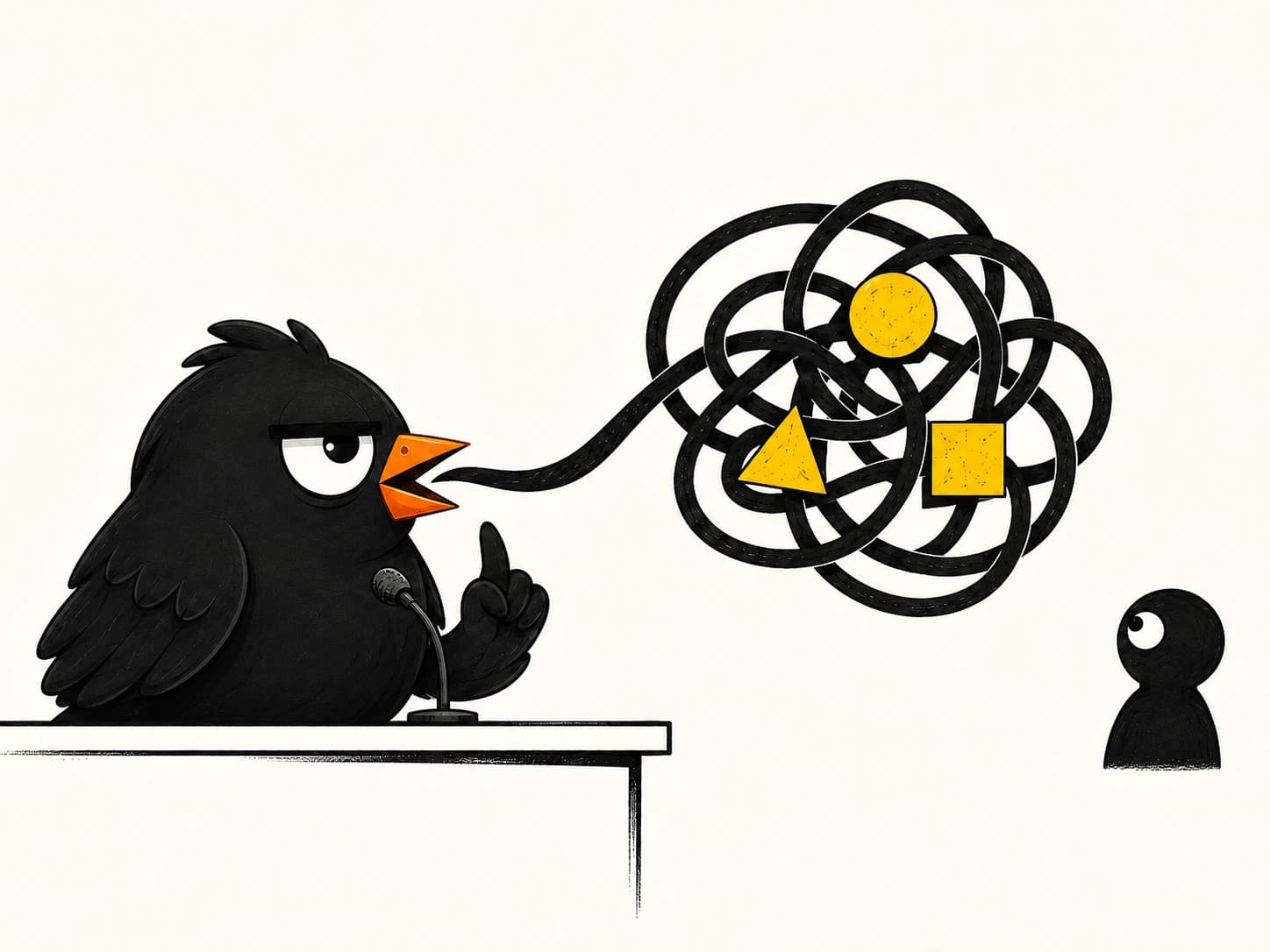
A Ptichi comic about thought boundaries: record two takes, hear the difference and test it on new words.
Problems
Stop over-explaining in meetings by deciding the point first, adding only the detail that changes the listener's understanding, and ending with a clear next step.

Problems
Why your recorded voice sounds unfamiliar, how playback differs from self-hearing, and one short listening exercise to separate sound from clarity.
Research
Poised's October 8, 2026 shutdown: what is confirmed, how Saga differs, and how to choose your next tool by the speaking job you need help with.
Research
How Ptichi's developing Home screen connects one clear recording action to guided practice, and what its weekly activity can actually tell you.
Research
How to check listener feedback: separate task training, voice familiarity and message knowledge, then try a bounded A/B rehearsal.
Research
Rehearsal can help one answer without proving transfer. Try one cue-free take, then change the wording while keeping the facts.
Research
Why more pause, more pitch, more articulation or more volume can improve a metric while making speech less natural or less useful.
Research
How to decide which practice recordings to keep, what a WAV export preserves, and where an app's deletion control ends.
Research
Why we are building recording and feedback as separate parts of Ptichi.
Research
Why useful speech coaching needs abstention: some recordings support playback or timing but not confidence, clarity, energy or causal advice.
Research
Choose speech-coaching tools by the speaking job. Compare dated product claims, privacy and business signals, then try one message with a factual key.
Research
Voice is becoming a work interface, not just a presentation skill. Learn when speaking to AI helps, what quality means, and where the microphone fits.
Research
Compare two voice recordings for one useful question. Keep facts and setup notes, separate self-listening from listener recovery, and limit what a better take proves.
Techniques
Learn respiratory–speech coordination: enough air for the thought, sensible replenishment, and no fake diaphragm coaching.
Techniques
Train listener recovery of names, numbers and key words without turning accent similarity or exaggerated mouth movement into the goal.
Techniques
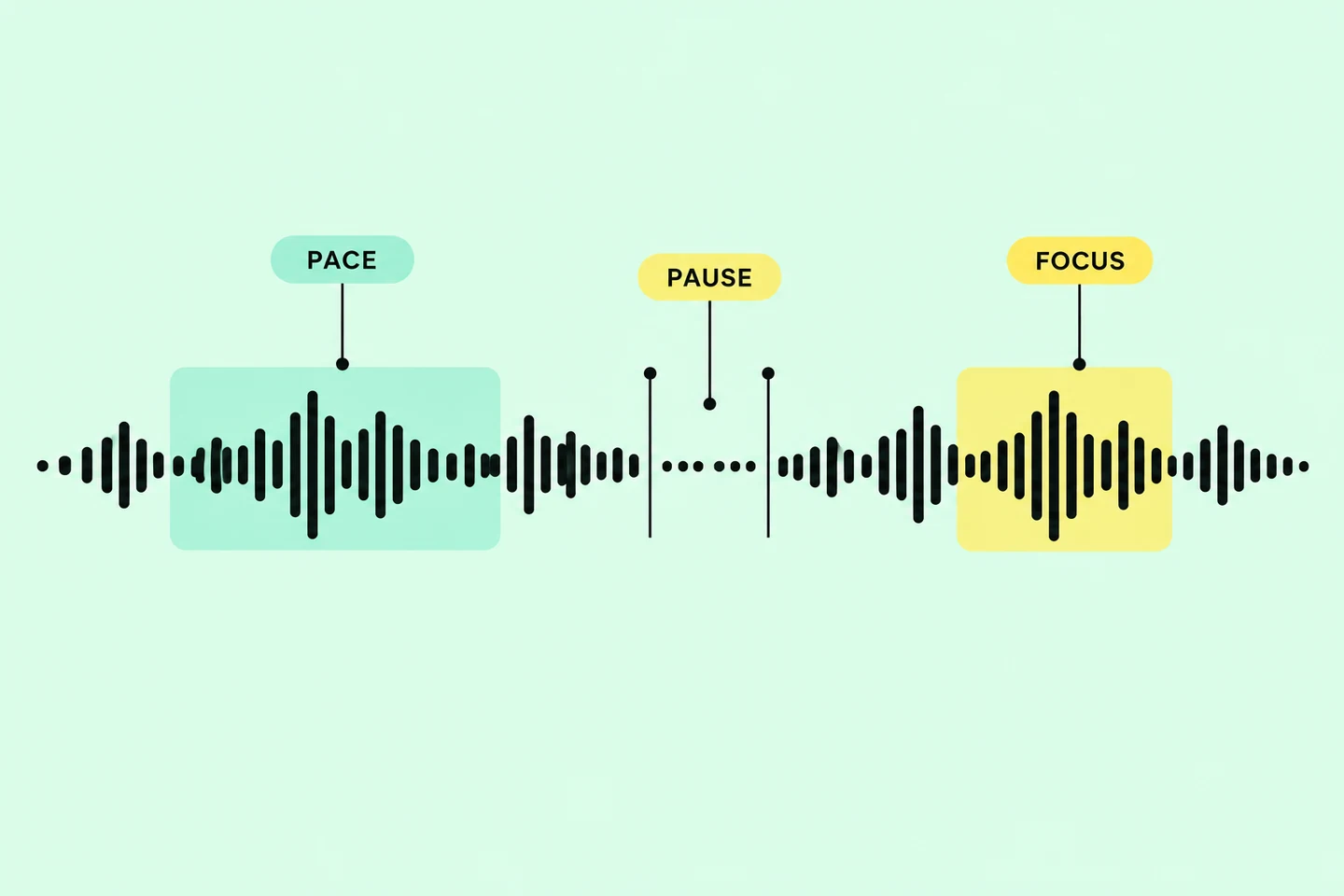
Try one timing change around a key fact, then compare listener understanding, effort and naturalness. A WPM count alone cannot choose the best pace.
Techniques
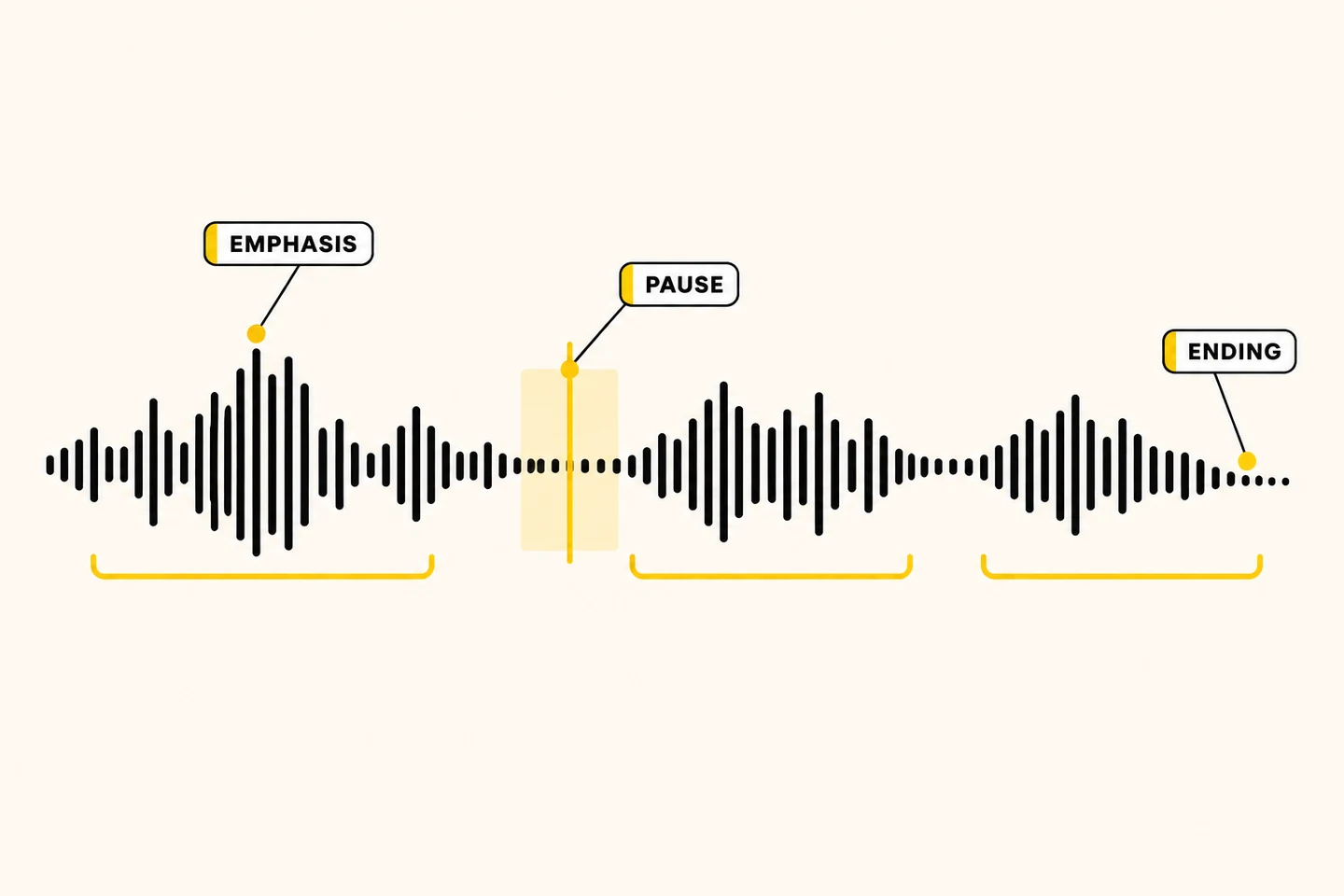
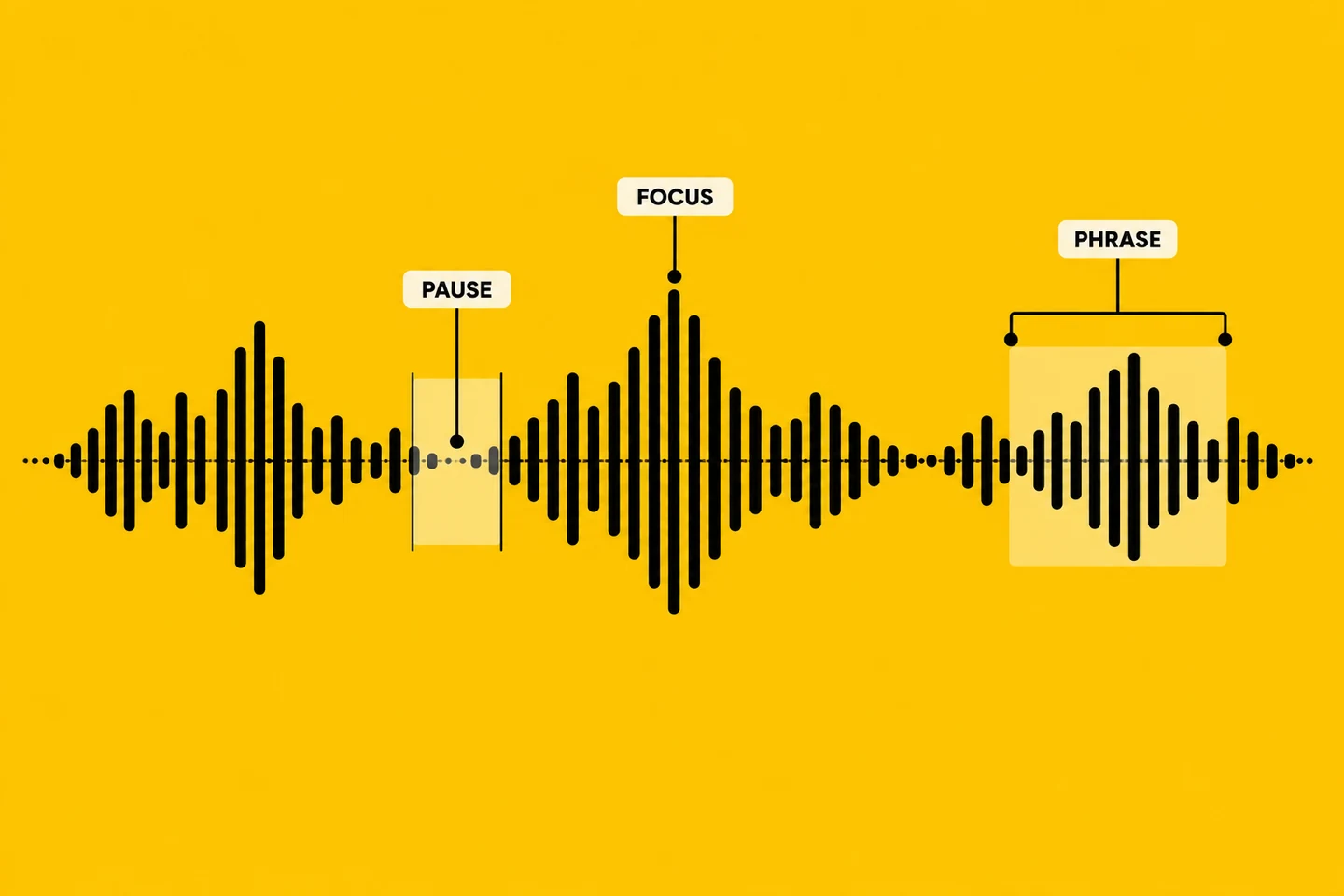
Make boundaries between ideas audible without slowing every word or turning pause duration into a score.
Techniques
Check whether the final useful words are clear, try one comfortable change, and keep listener recovery separate from your own playback impression.
Techniques
Separate a quiet recording from a listener's audibility problem. Try one setup or delivery change, then check the important words and speaking effort in the intended setting.
Techniques
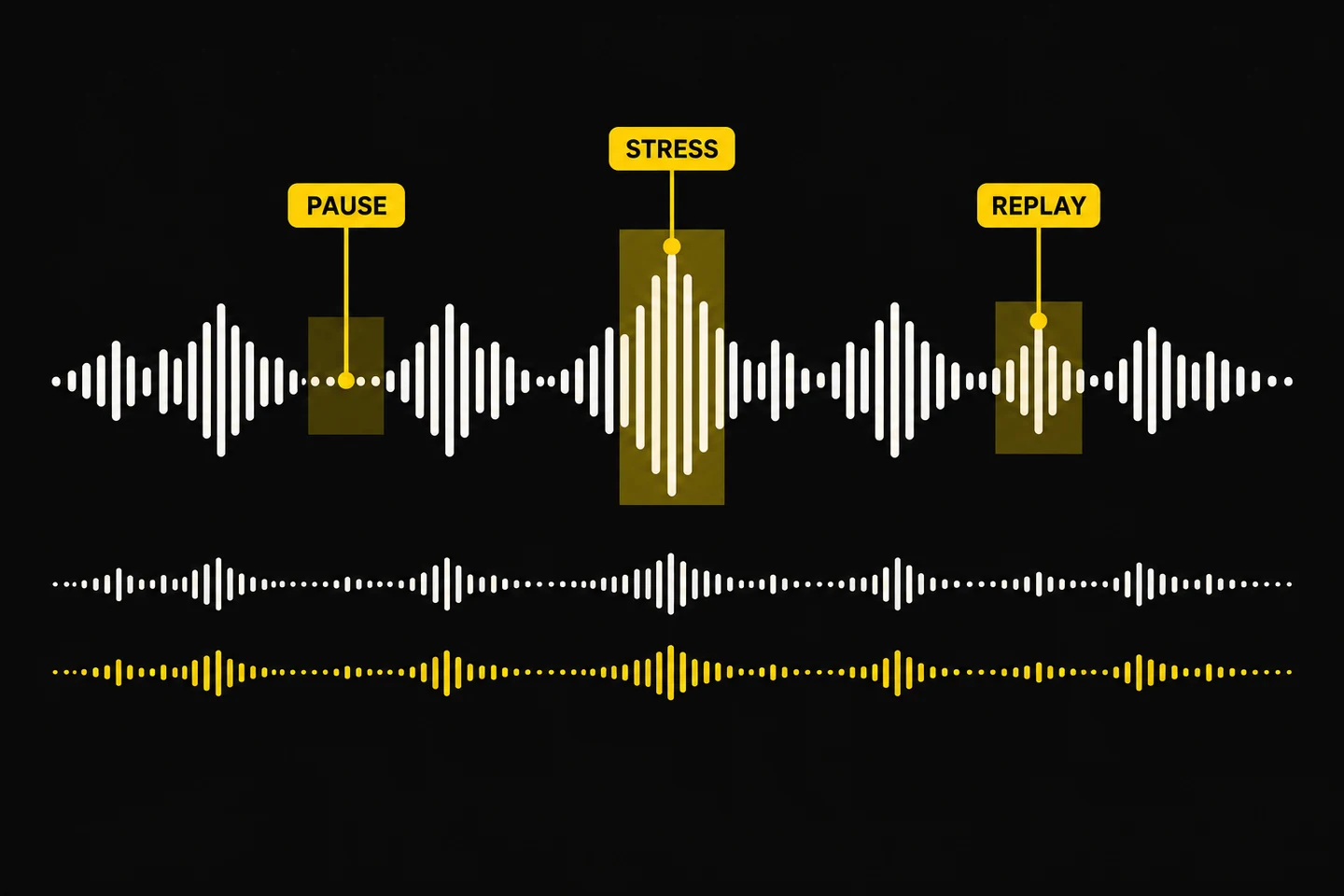
Use contrastive prominence to make new or corrected information stand out—without stressing every ‘important’ word.
Techniques
Normal nasal resonance is not a defect. Compare comfort and clear speech; more vibration or resistance does not prove a better voice.
Techniques
Use English intonation to distinguish asking, checking, confirming and continuing instead of applying one pitch rule to every sentence.
Techniques
Train intentional English statement endings without the bad rule ‘always lower your pitch at the end’.
Techniques
A practical map of 15 speech and voice complaints: choose a first check, find an exercise and inspect the evidence without turning a recording into a diagnosis.

Tools
A practical placement check before A/B voice practice, plus a bounded way to use the microphone as feedback without turning it into a judge.