Techniques
‘Sound less nasal’ is not a complete voice instruction
Normal nasal resonance is not a defect. Compare comfort and clear speech; more vibration or resistance does not prove a better voice.


Make one part of your speech easier to follow. Each guide explains a technique and gives you something to try.
Normal nasal resonance is not a defect. Compare comfort and clear speech; more vibration or resistance does not prove a better voice.
Learn respiratory–speech coordination: enough air for the thought, sensible replenishment, and no fake diaphragm coaching.
Train listener recovery of names, numbers and key words without turning accent similarity or exaggerated mouth movement into the goal.
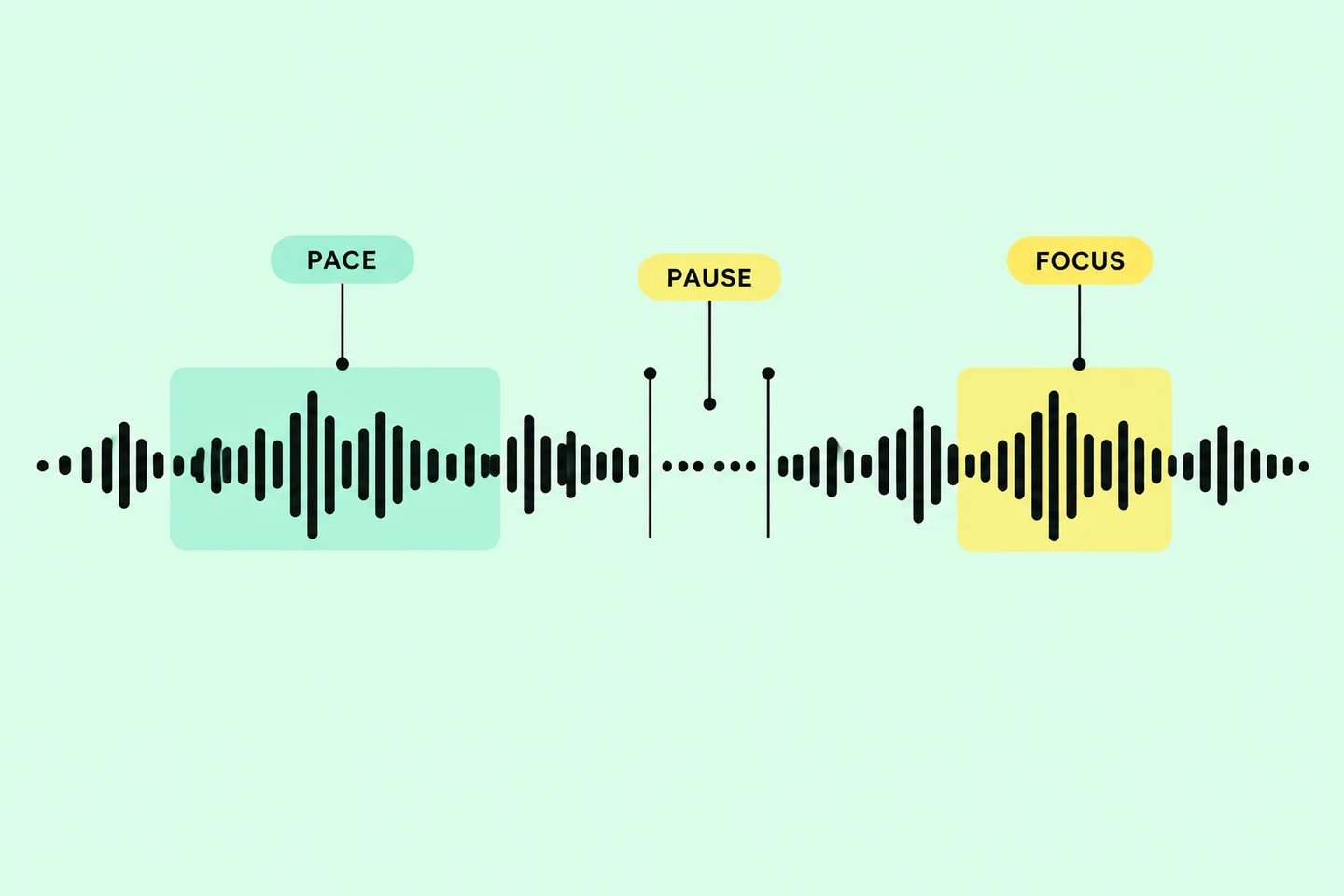
Try one timing change around a key fact, then compare listener understanding, effort and naturalness. A WPM count alone cannot choose the best pace.
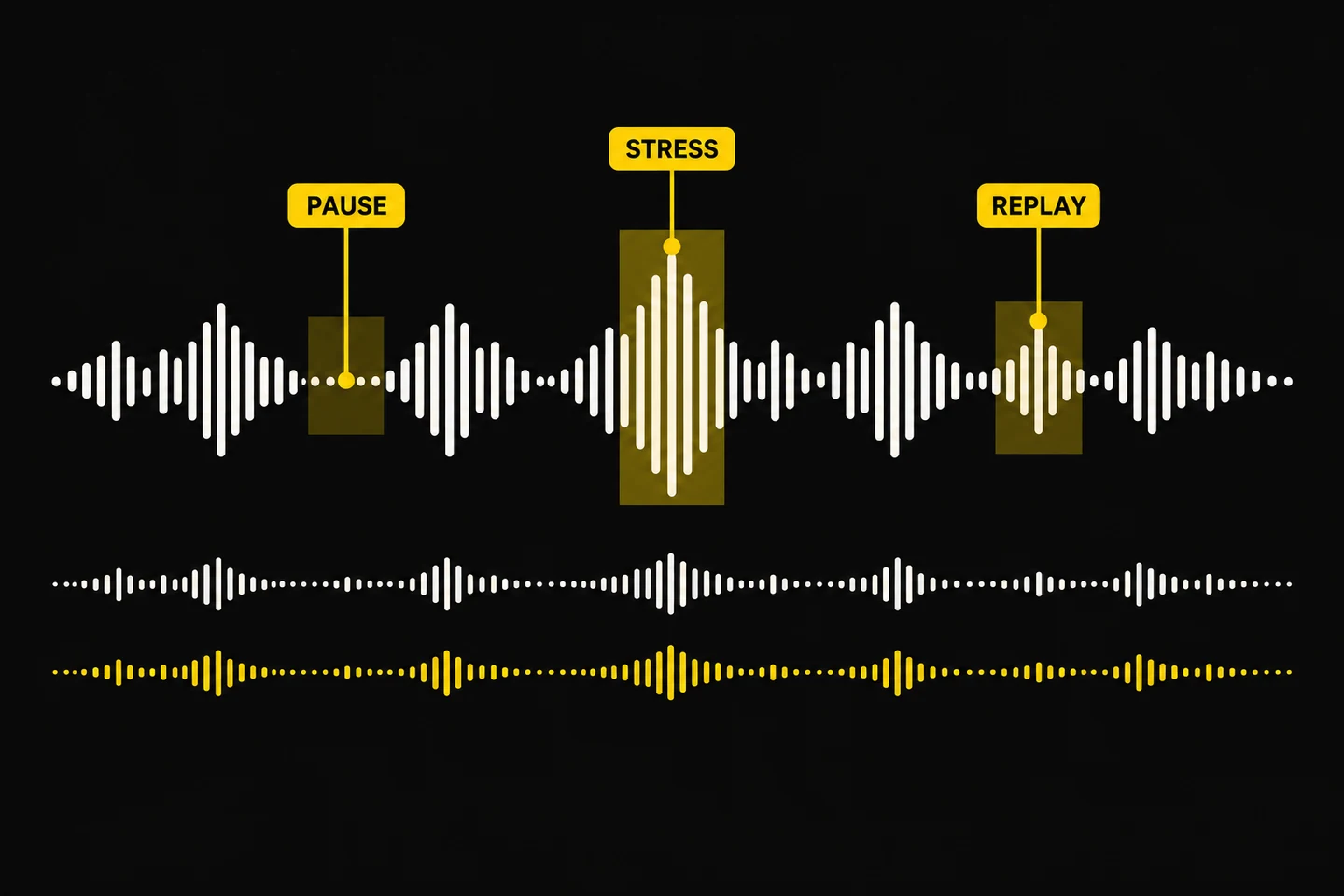
Use contrastive prominence to make new or corrected information stand out—without stressing every ‘important’ word.
Use English intonation to distinguish asking, checking, confirming and continuing instead of applying one pitch rule to every sentence.
Check whether the final useful words are clear, try one comfortable change, and keep listener recovery separate from your own playback impression.
Train intentional English statement endings without the bad rule ‘always lower your pitch at the end’.
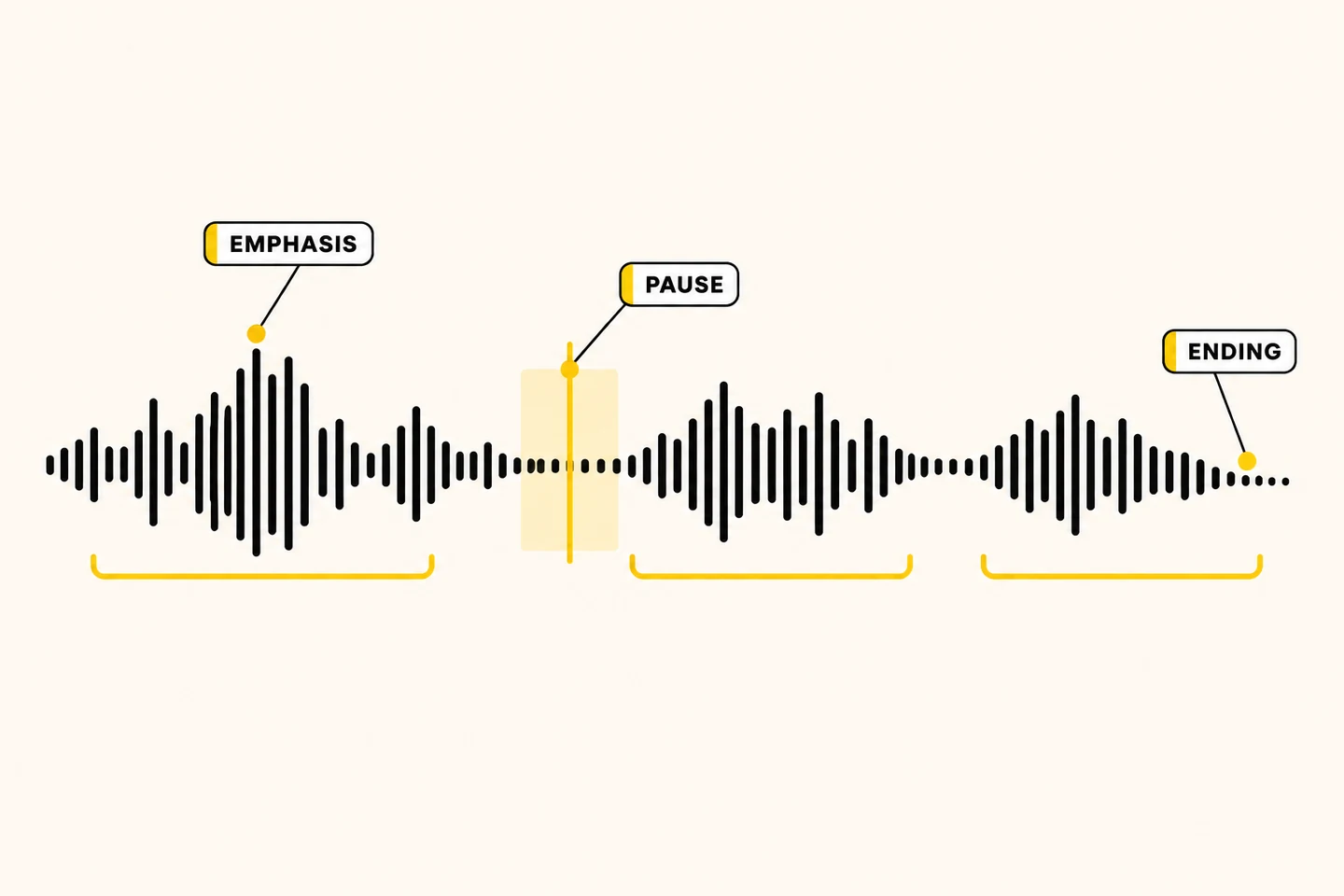
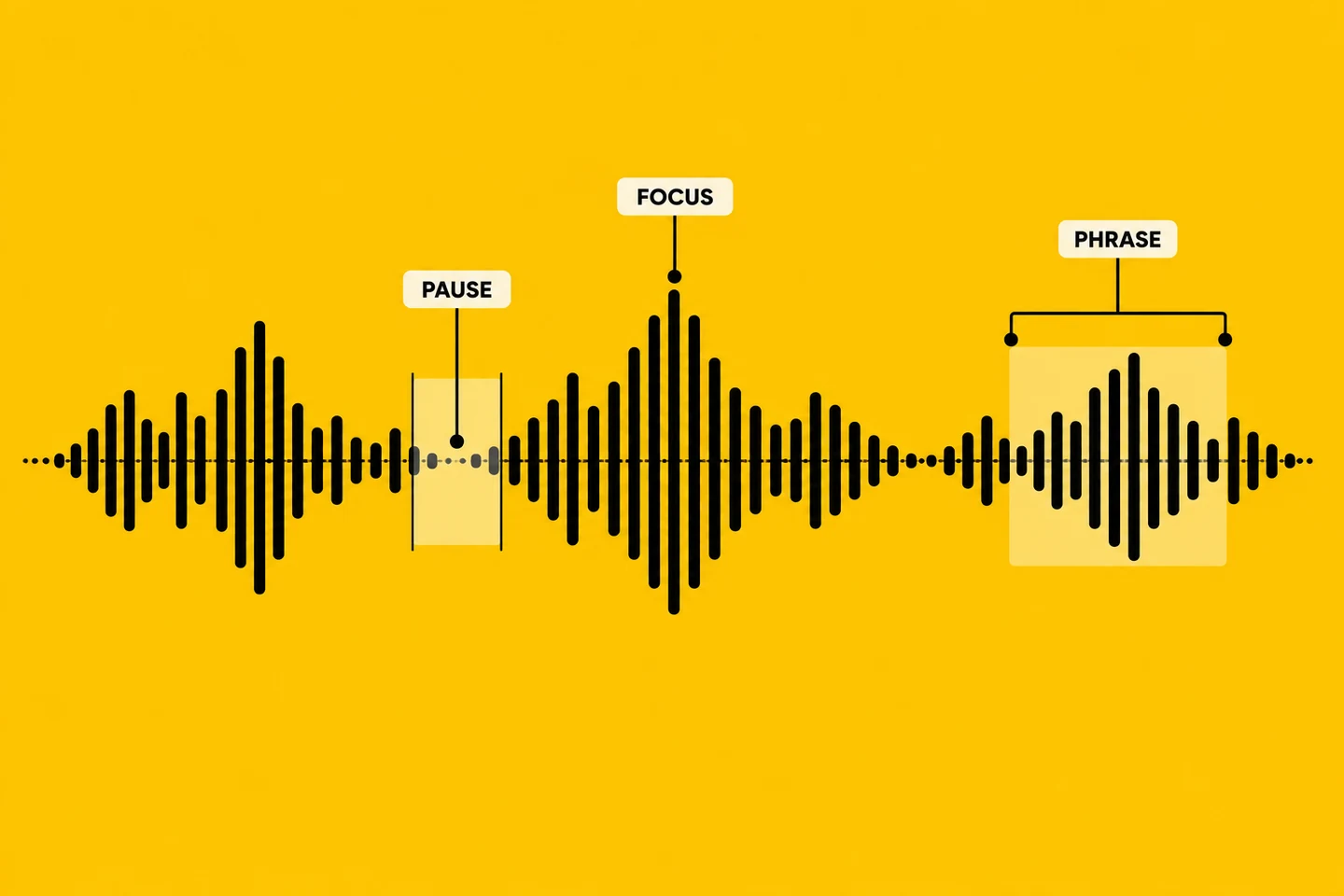
Make boundaries between ideas audible without slowing every word or turning pause duration into a score.
A practical map of 15 speech and voice complaints: choose a first check, find an exercise and inspect the evidence without turning a recording into a diagnosis.
Separate a quiet recording from a listener's audibility problem. Try one setup or delivery change, then check the important words and speaking effort in the intended setting.