Practice
Give the thought room to land
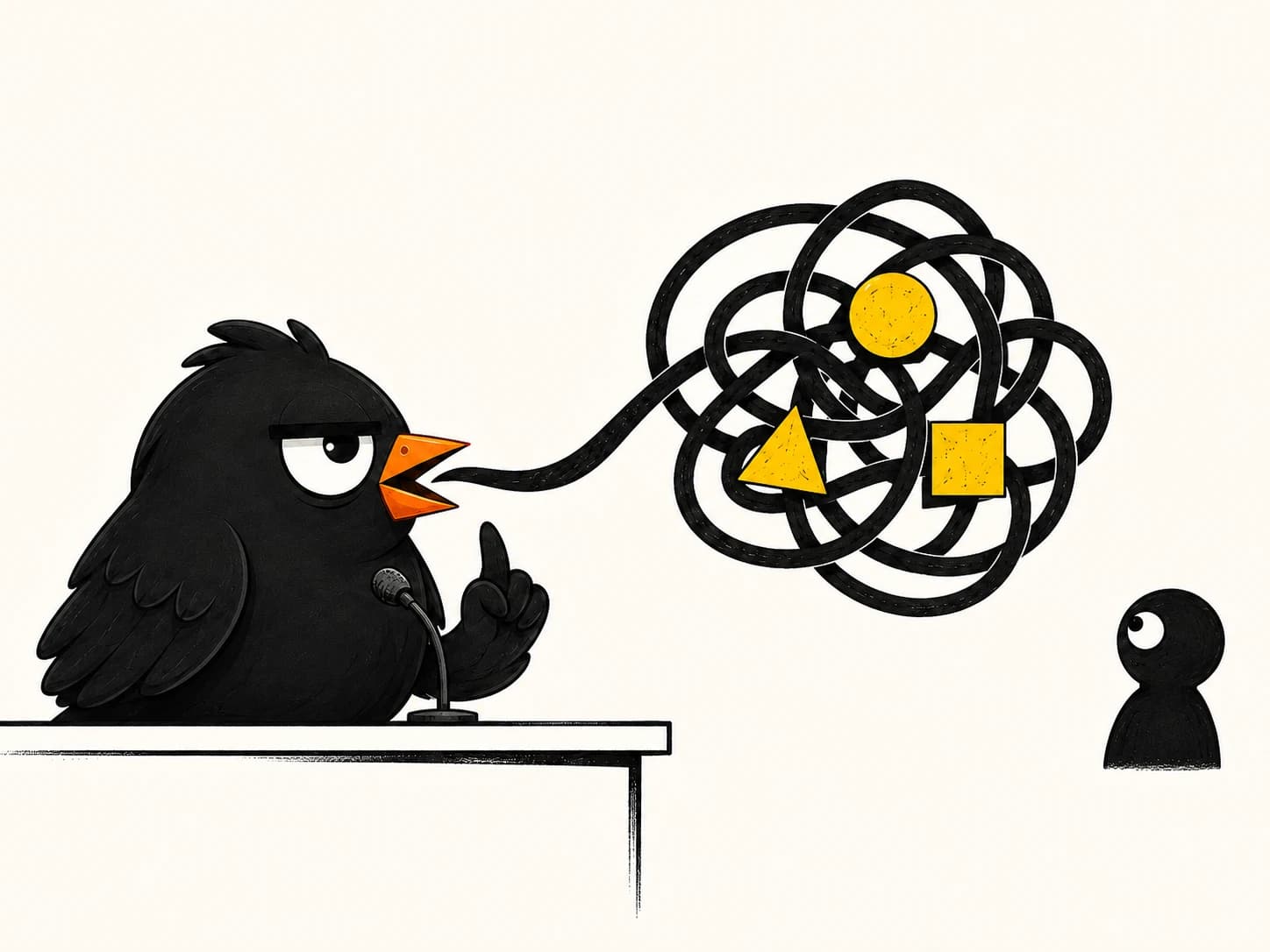
A Ptichi comic about thought boundaries: record two takes, hear the difference and test it on new words.


Short rehearsals built around one observable change, a comparable retry and honest limits on what one attempt can prove.
Pick the sentence closest to what bothers you. Try the first check to separate the speaking problem from the recording setup, then follow a published guide or practice. These are project-authored examples, not diagnoses.
Write the one point the listener should recover, then check whether a first-pass listener can state it without seeing the target.
why the speaker plans this way.
Start with the listener takeaway before changing delivery. Do not infer a cognitive or clinical cause from a recording.
After one take, identify the first sentence that actually answers the question.
whether delayed answering reflects a psychological trait.
Earlier is not universally better; preserve context when it is needed to keep the answer true.
Compare one ordinary take with one take that changes only a meaningful boundary or prominence cue.
an ideal pitch range.
Change one meaningful boundary or prominence cue, not your whole speaking style.
Mark one thought boundary and compare an ordinary take with a take that makes that boundary audible.
an ideal speaking rate.
The target is listener time and audible boundaries, not a universal words-per-minute number.
Check microphone gain, distance, room noise and playback level before asking the speaker to get louder.
a medical cause.
Check the capture chain before increasing vocal effort. Stop rather than push through pain, persistent hoarseness or breathing/swallowing difficulty.
First check that microphone distance, room noise and playback level are not masking consonants or endings.
a speech disorder.
Rule out obvious masking first. An ordinary recording cannot establish a speech disorder or an accent defect.
Source: Ptichi public-safe problem taxonomy + curated exercise corpus. Research-only exercises are not promoted here. Projection reviewed 2026-10-03.
A Ptichi comic about thought boundaries: record two takes, hear the difference and test it on new words.
Rehearse one meeting answer, preserve its facts and uncertainty, compare two takes, and keep a later check separate from proof of learning.
A short listening exercise: record a contrast, make the boundary audible, then try it with new words.